BLOG POST Proudly, Openly Us Support That Fits Us Neuroqueer Becomings
Your Self-Knowledge Is Not Up for a Vote.
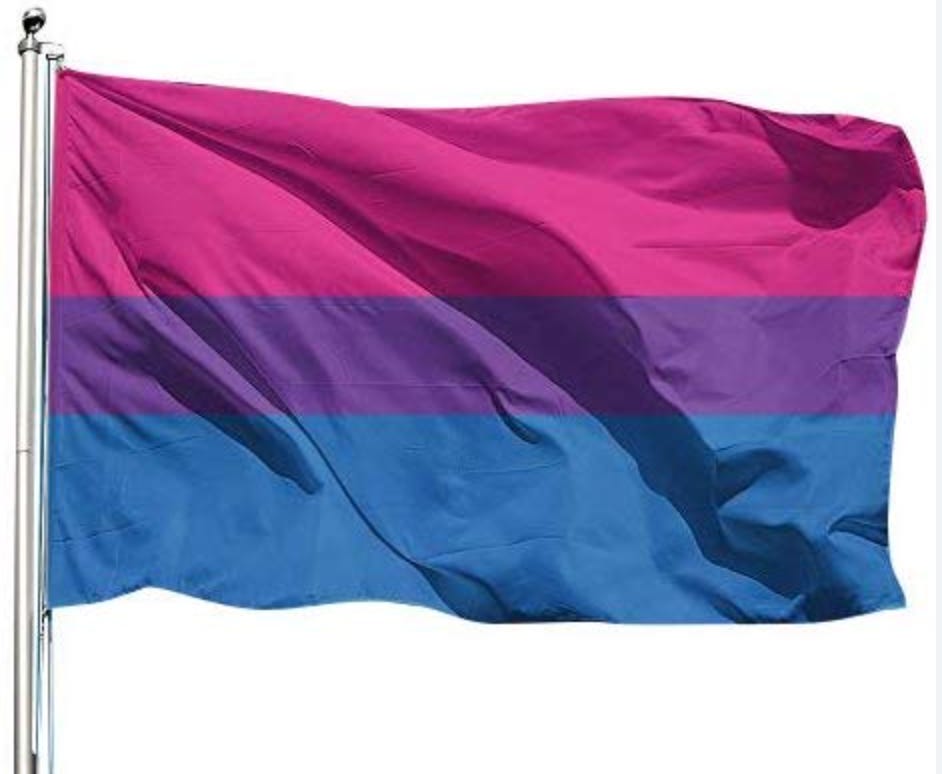
I am a bisexual woman married to a woman. And it’s pride month and I’m going to talk about it. Because if you relate, if you’re struggling with taking up space, with owning the fullness of who you are, welcome. Pride is for you too. Maybe even moreso.
Breaking The Frame is a reader-supported publication. To receive new posts and support my work, consider becoming a free or paid subscriber.
I disclose the facts of my relationship and it’s relationship to my bisexuality plainly because it still needs saying. In the clinical spaces I move through, in the professional organizations I have lead, in the queer and neurodivergent communities I’m embedded in — across almost all of it, I am often the only one. The only bisexual woman in the room who is also partnered with a woman. Which means I am, in most rooms, a walking disruption of the assumption that a partner tells you anything definitive about who someone is. But I am certainly not alone in that.
Here is what I have learned about how I am read in the world: in queer spaces — the spaces I have spent my life and most of my career in — I am gay when my wife is next to me and straight when she isn’t (that, or I have a sister who looks nothing like me). My identity, apparently, commutes with her. I have spent years being legible only in relation to whoever is standing closest to me, which has done wonders for my appreciation of irony and my collection of tattoos. If I could just commit harder to the aesthetic, maybe everyone would stop having to do the math. And yes, we’ll take one check, thanks.
I will be honest: I am probably obnoxious about it. I have a fairly aggressive refusal to be invisible. Every year on Lesbian Visibility Day, I post a “still not gay” and let everyone sit with that for a minute. I correct assumptions. I name myself loudly in spaces where naming yourself feels like a whole production. I do not particularly apologize for this.
And it has worked, in its way. I don’t carry much of the internalized need to justify my presence or prove my queerness that so many bisexual people describe. I’ve been in these communities long enough, and loudly enough, that my place in them doesn’t feel contingent on who I go home to. That’s a real thing, and I don’t take it for granted. And if you think I’m obnoxious now, well, in an alternative story where I had married a man, I would have been utterly relentless.
But it has also meant something else — something worth naming honestly before I write about what erasure costs.
Because I am one of the relatively few bisexual women who doesn’t have much experience of heterosexual privilege. I have not moved through the world in a straight-passing relationship wondering if my queerness still counts. I have not had to decide whether to come out to a partner’s family, or navigate a community that welcomed the relationship but quietly set me aside. The particular kind of erasure I’m writing about — the slow disappearing that happens inside a relationship with a man, the audit that never quite ends — is not my firsthand experience.
It is, however, the experience of almost everyone who finds their way to me.
In my clinical practice. In community spaces. In the DMs that come after I post something like this. The story arrives in different voices, but the shape is almost always the same.
Someone comes in — or reaches out in a DM, or says it carefully at the end of a community meeting — and the shape of the story is always roughly the same. They’re bisexual, or queer, or still finding the right word for what they know themselves to be. And they’re in a relationship with a man. A good relationship, sometimes. A loving one.
And somehow, they’ve started to disappear inside it.
Not because he’s cruel. Not always because he’s even doing anything specific wrong. But because the world — and maybe some version of themselves they’ve internalized without realizing it — keeps treating their relationship as the final word on who they are.
The Logic of Erasure
Here’s what erasure actually rests on, when you trace it back to its foundation:
A deep, stubborn mistrust that people know their own desire.
And a corresponding assumption that a partner defines it.
If you’re a woman with a man, the logic goes, then you are a woman who wants men. The relationship is legible. It’s categorized and it falls into the backdrop of “normal and average” and despite the privilage it carries with it, it comes with a heaping dose of erasure. The question of your queerness gets filed somewhere — under “past,” under “phase,” under “irrelevant now that you’ve chosen.” As though desire were a multiple-choice question and you’ve already filled in the bubble.
What this logic refuses to hold is the possibility that a person can know exactly who they are, exactly what they feel, across the full landscape of their attraction — and that none of that changes based on who is in their bed right now.
Desire isn’t defined by your current relationship. A relationship is just a relationship. It is not a confession. It is not an answer. It doesn’t cancel anything out.
But try telling the world that.
What the Erasure Actually Sounds Like
It comes from strangers, obviously. The “so you’re straight now” when someone announces a partner. The skeptical eyebrow. The way they stop getting invited to certain spaces, certain conversations. The way queer community can sometimes close just slightly, like a door that isn’t quite shut on them but isn’t exactly open either.
But the erasure that does the most damage — the kind I hear about most consistently in my clinical work and in community spaces — is the internal kind. The self-erasure.
The way someone starts editing themselves in their own relationship. Not performing straightness exactly, but letting it go unchallenged. Not correcting the assumption. Deciding it’s too complicated to explain, too risky to assert, too uncertain whether it even matters anymore.
There’s a grief in that. Letting a part of yourself become untranslatable, not because it isn’t real, but because you’ve run out of confidence that anyone will believe you.
That’s not a small thing to carry.
The Question That Does the Most Harm
I want to name the specific question underneath a lot of this, because I think it’s doing enormous damage in ordinary-sounding ways.
Are you sure?
Are you sure you’re really queer if you’re with a man? Are you sure it’s not just something you experimented with? Are you sure you wouldn’t feel this way regardless of who you were dating?
The question sounds like curiosity or even care. What it actually communicates — regardless of intent — is a refusal to trust that a person is the expert on their own interior life.
As a therapist, I recognize this immediately. When we consistently communicate to someone that their self-knowledge is suspect, we aren’t being careful or thorough. We’re doing something much more corrosive: we’re training them to outsource their own authority. And people learn. They internalize the auditor’s voice. They start asking it of themselves before anyone else can.
We would not ask a straight woman with a boyfriend if she was sure she was straight (but maybe we should). We would not require her to have been equally interested and experienced in every gender at every point in her history before we accepted her stated identity as real. We take her at her word because why wouldn’t we.
But bisexual and queer folx — particularly in relationships with partners who appear to be on the other end of a gender continuum — get placed in an ongoing audit. Their identity is provisional. It requires proof. And the proof keeps moving.
Her queerness is hers. It belongs to her interiority, her history, her knowing of herself. A man in her life didn’t create it and cannot erase it. let’s stop letting men define the world. It’s about time. It isn’t going so well.
Choosing him didn’t answer the question because the question was never up for debate.
What This Costs: A Clinical Lens
I’m going to be direct about what I see in the room when this has been someone’s long-term experience.
Identity fragmentation. Identity isn’t just a label we apply to ourselves — it’s an organizing structure. It shapes how we make meaning, how we connect with others, how we understand our own history. When a central part of identity is chronically invalidated or left unnamed, it doesn’t neatly disappear. It goes underground. People describe feeling a persistent low-grade sense that they’re somehow performing their own life — present in it, but not entirely of it. That’s not an abstraction. That’s a real clinical presentation, and it has a source.
Learned epistemic distrust. When someone is told consistently — by partners, by community, by culture — that they don’t quite understand their own desire, they start to believe it. What I see clinically is people who have become genuinely uncertain about their own interior experience. Not because the experience isn’t clear, but because the external distrust has been internalized so thoroughly that their own perception feels unreliable. This is a direct consequence of sustained invalidation, and it extends beyond sexuality. People who have been taught not to trust what they feel tend to apply that lesson broadly.
Ambiguous grief. Pauline Boss’s framework of ambiguous loss — grief without clear resolution, without social recognition — maps cleanly onto this experience. These losses often don’t come with language. There’s no ritual, no community acknowledgment, no “of course that’s hard.” There’s just the slow accumulation of a self that’s been partially set aside, and no clear permission to mourn it.
Relationship costs. The self-erasure doesn’t stay contained to the individual. It shows up relationally. When someone isn’t bringing their full self into a partnership — when a core part of their identity feels unspeakable or irrelevant — that creates distance, even when nothing is overtly wrong. I often see this framed by clients as a vague dissatisfaction they can’t name, an intimacy that feels mysteriously limited. The unsaid things take up space.
What It Would Look Like Instead
I don’t think most people asking “are you sure?” are trying to cause harm. I think they’ve absorbed a framework that treats desire as object-determined — you want what you partner with, full stop — and they haven’t questioned it because it’s rarely cost them anything to hold it.
Clinically and culturally, the shift I’m pointing toward is this: accepting that desire is an interior fact, not a relational outcome. That a person can love a man deeply and truly and completely and also be queer. That these are not competing claims. That identity is not a behavior. That Queer spaces are for Queer people. Full stop.
For clinicians specifically: this means creating space to hold the full picture. It means not colluding — even gently — with the assumption that a person’s current relationship(s) defines the relevant frame. It means understanding that when someone has been chronically invalidated around identity, affirming their self-knowledge isn’t just supportive — it’s genuinely therapeutic.
For queer community: it means staying conscious of the ways we can inadvertently replicate the same erasure we’ve fought against. Bisexual women in relationships with men have not left. They don’t need to re-earn their place when circumstances change.
And for the people inside the self-erasure: your self-knowledge is not up for a vote.
And I think there is something else worth naming here, especially during Pride month.
When a bisexual person partners with someone who is straight, they are in a mixed-orientation relationship. We tend to reserve that language for certain kinds of couples, but it is true here too. One partner is queer. One partner is not. That reality doesn’t disappear simply because the relationship looks familiar to other people. The queer person’s identity is still present. Their community is still theirs. Their history is still theirs. Their Pride is still theirs.
In fact, I would argue that loving a queer person should come with a willingness to love all of who they are. Not just the parts that fit neatly into the relationship. Not just the parts that make sense to outsiders. The whole person. Their history, their identity, their community, their culture, and their pride.
Because the goal of a relationship should never be assimilation. It should be belonging.
So if you are a bisexual or queer woman partnered with a man and wondering whether Pride is still for you, whether queer space is still for you, whether you are allowed to take up room inside a community that sometimes struggles to see you: Pride is for you too.
Maybe even more so.
I know what it is to be in a room and be the only one. To have an identity that doesn’t resolve neatly into the assumptions people make about your life when they look at it from the outside. My particular experience of bisexuality has been loud and mostly unafraid — not because the road was easy, but because somewhere along the way I decided invisibility was an unacceptable outcome and wasn’t going to be the price of admission. I have stood in queer spaces I helped build and been read as a visitor without my wife beside me. That particular absurdity never quite gets old.
But I hold my experience lightly here, because I know it isn’t the common one. The more common experience for bisexual people is quieter, and lonelier, and arrives in my office or my inbox carrying a kind of exhaustion that comes from years of having to decide, over and over, whether it’s worth it to be seen.
It is. You are.
Pride was a riot. And I, undoubtedly, identify as a riot. an impressively large or varied display of something.
Breaking The Frame is a reader-supported publication. To receive new posts and support my work, consider becoming a free or paid subscriber.